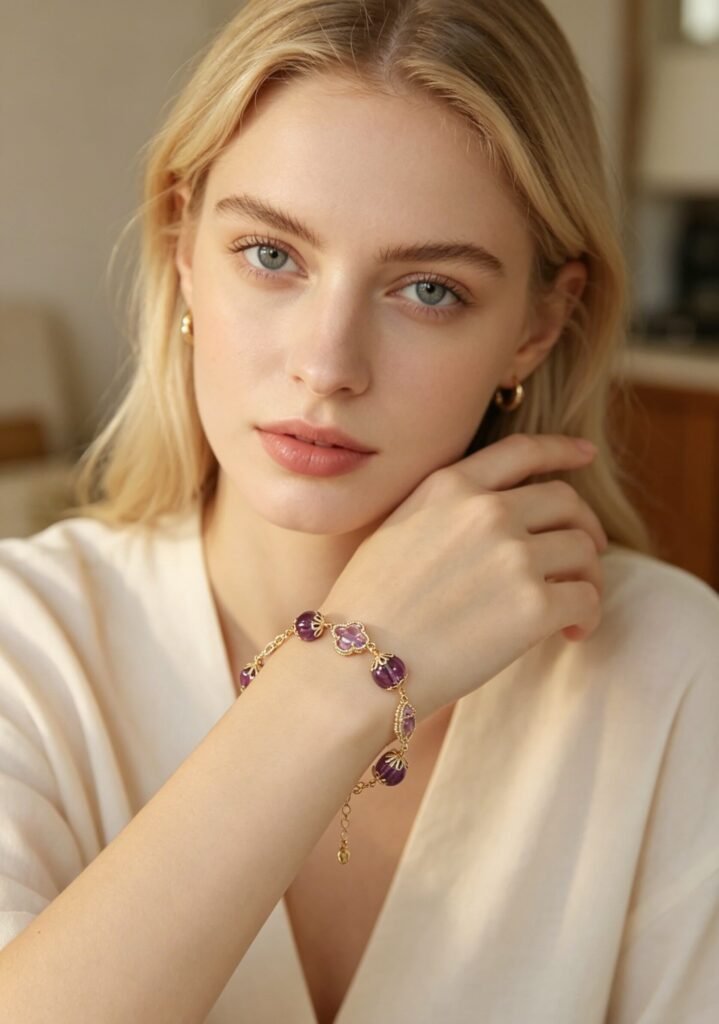
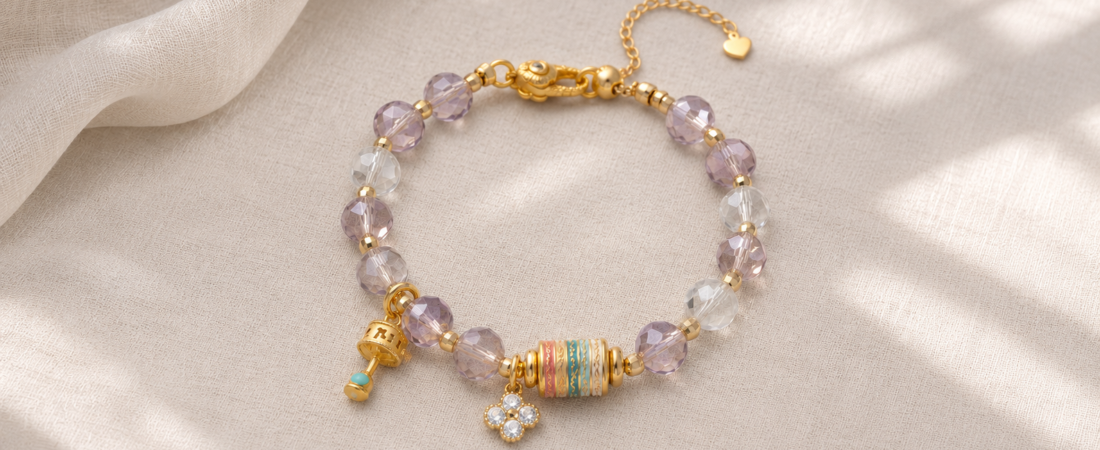
To stack beaded bracelets, start with one bracelet you enjoy wearing and add a single companion that feels comfortable beside it. Look for a connection in color or shape, give one piece the visual focus, and check that the bracelets move without catching or pressing against each other.
An understated stack does not need to look like a ready-made set. It can feel personal: a familiar bracelet, a color you return to, and one detail that makes an ordinary outfit feel considered. The aim is a combination you want to wear through your own day.
Choose an anchor bracelet
Your anchor is the piece you want to notice first. It might have a strong color, larger beads, a flower detail or a small charm. Lay it on a plain surface and look at what gives it character before choosing anything to sit beside it.
If the anchor already has several decorative details, a quieter companion can give those details room. If it is a simple row of beads, a different texture might add interest. You do not need to add another piece just because there is space on your wrist.
For this guide, begin with two bracelets. That is an editorial starting point, rather than a fixed jewelry rule. Wear the pair for a while before deciding whether a third would add something useful.
Connect the colors without matching everything
Repeat one small detail
Choose one connection between the bracelets: a similar tone, a translucent finish or a repeated rounded shape. A small shared detail can make two different pieces feel related without requiring identical stones.
Then consider your clothes. A bracelet stack that works beside a cream sleeve may feel different against a patterned shirt. Try the combination with what you actually wear, rather than buying every piece around an imagined occasion.
Let a richer color have some breathing room
Purple, deep red and other saturated colors can become the focus of a small stack. Surrounding that focus with equally strong colors may be exactly your style, but a quieter companion offers another option.
A useful question is whether you can still see what you liked about the first bracelet. If the answer is no, remove one piece and look again. Restraint is a choice you can make by editing, without needing to purchase a replacement.
Balance the beads and decorative details
Bracelets with different bead sizes can create a pleasing rhythm, but measurements alone do not determine whether they work together. A larger bead, raised setting or projecting charm may occupy more space than the piece appears to in a photograph.
Start by laying the bracelets side by side. If one has a focal detail, decide whether you want it to remain visible or move freely. Avoid forcing two decorative centers into the same small area.
Next, try the pair on. Turn your wrist, relax your hand and bend your arm. Check whether a charm slides beneath another bracelet, a setting catches, or a bead presses into your skin. A combination that looks balanced on a table still needs to feel comfortable on you.
Check fit before adding another bracelet
A bracelet that feels comfortable alone can feel crowded beside another. Beads add bulk, and the two pieces may settle at different points on your wrist. There is no single extra-length allowance that makes every stack work.
Compare each maker’s stated fit information, rather than assuming two bracelets with the same listed length have the same usable interior space. If the measurements or closure details are missing, ask before ordering.
Our bracelet size guide explains how wrist measurement differs from bracelet length. Use that guidance alongside the specific product details; a styling photograph cannot confirm your fit.
If you already own both pieces, try them together while seated and moving normally. They should not dig in, leave you constantly rearranging them, or require you to pull a closure or cord into position.
Try three understated combinations
A botanical focus with a quieter companion
The Artisan Amethyst Flower Bracelet brings purple amethyst beads and a flower motif to the wrist. As a styling direction, let the botanical detail be the focal point and try a simpler piece you already own beside it.
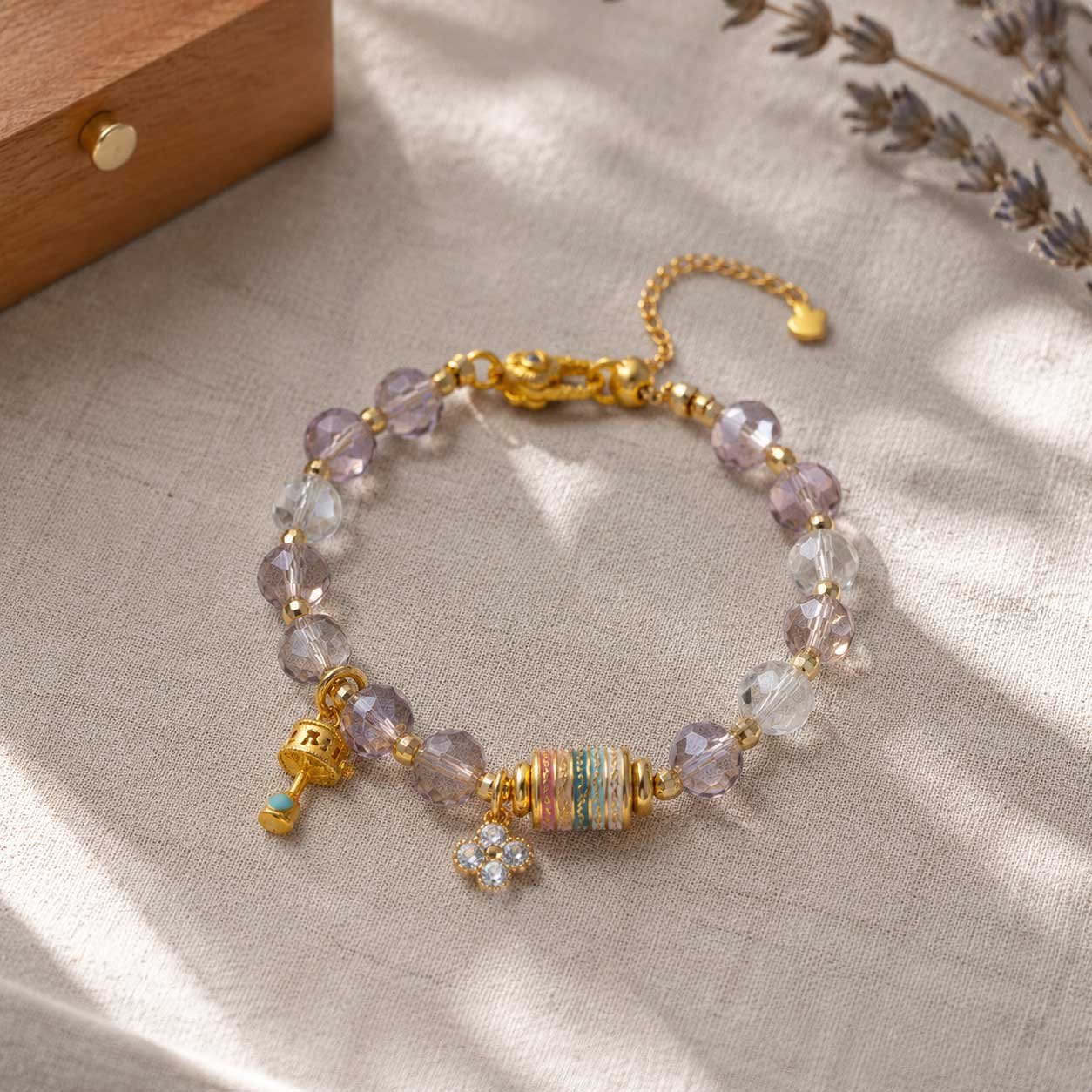
Choose the companion after checking how the two surfaces meet. This suggestion does not establish their size compatibility or the material of the flower accents.
Deep wine red with a simple silhouette
The Natural Red Garnet Bracelet offers a deep wine-red palette. You might build a small stack around that color, keeping the other piece visually quieter, or wear the garnet alone when a second bracelet adds too much movement.
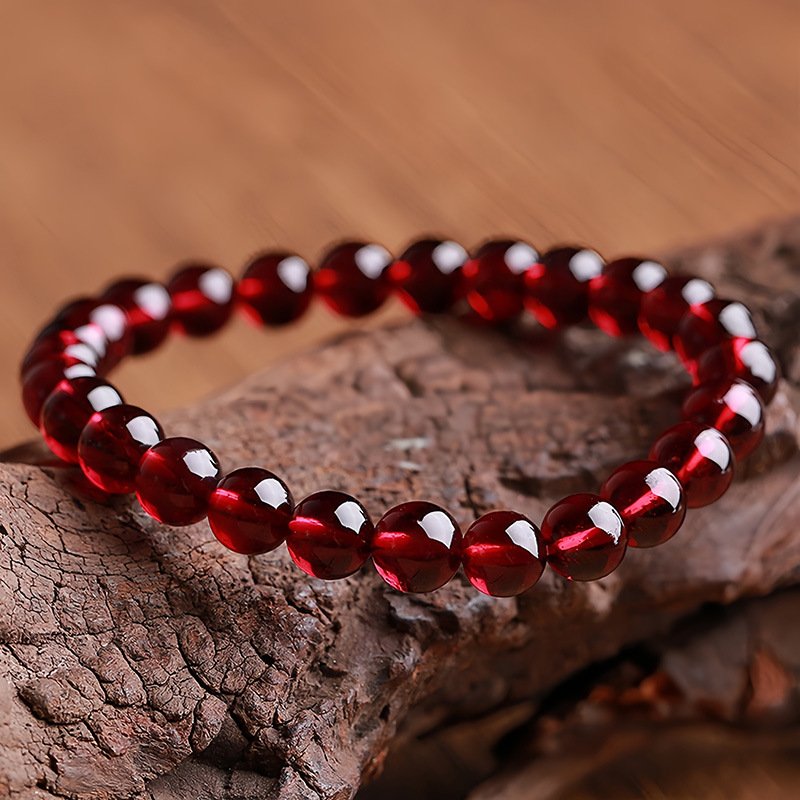
These are two alternative starting points. The amethyst and garnet bracelets are not presented here as a confirmed matching set.
One bracelet beside a watch
A watch can already provide a strong shape and a metal finish. Try just one bracelet with it, then check whether the bracelet rubs the watch case, obscures the dial or catches on the fastening.
There is no need to make the stack work on one wrist. Wearing the bracelet on the other wrist is a straightforward option when the pieces touch too closely or make everyday tasks awkward.
Protect the pieces as well as the look
Gemstones, metal details and settings can rub against neighboring jewelry. A difference in material hardness is one consideration, but shape, surface condition and repeated contact matter too. A more spacious arrangement is not a guarantee against scratches.
Avoid crowding sharp or raised details against smooth beads. Separate pieces if they catch, scrape or repeatedly strike one another. For desk work or other activities where the stack knocks against a hard surface, taking it off may be more comfortable.
Follow the care instructions for each bracelet. Remove jewelry before showering, swimming or exercise when the maker advises it, and keep perfume and lotions away from the pieces. Do not assume that a stone’s tolerance for water also applies to its cord, fittings or decorative elements.
Store bracelets separately after wearing them. For cleaning, see our gentle crystal bracelet care guide and the instructions for your particular piece.
Leave room for personal meaning
A stack can hold a memory, a preferred color or a symbol you enjoy. Those associations do not need to match, and you do not have to assign an intention to every piece.
Braceletforluck draws cultural inspiration from Xiqiao Mountain in Foshan and the compassionate tradition of Guanyin. That inspiration informs the brand’s approach to symbolic cleansing, good wishes and thoughtful daily wear. It does not establish a promised result from a stone or combination.
Choose the meaning that feels appropriate to you, then return to the practical questions: do you enjoy the design, does it fit, and is it comfortable beside your other jewelry?
Frequently asked questions
How many beaded bracelets should I stack?
Begin with two and check the look and comfort before adding another. There is no required number; bead size, decorative details, clothing and your daily activities all affect what feels right.
Can I mix different gemstones in one bracelet stack?
You can choose different gemstones for their colors and personal associations. Check fit and the surfaces that touch, and follow each piece’s care instructions. Combining stones does not establish an added spiritual or health effect.
Can I wear beaded bracelets with a watch?
Try one bracelet first and check for rubbing, catching and pressure against the watch case or fastening. Wear the bracelet on the other wrist if the pieces crowd each other or interfere with normal movement.
Should stacked bracelets all be the same size?
Not necessarily. Listed length, bead diameter and closure design can affect how each bracelet sits. Compare the specific fit information, and ask the seller when measurements are missing rather than assuming one size will work for every piece.
Choose one piece to begin
Explore the Braceletforluck collection for a color or detail you would enjoy wearing on its own. Confirm its fit and care requirements, then decide whether a companion adds something to your everyday style.