Lucky bracelet symbols are easiest to understand when you identify the motif before interpreting it. A four-leaf clover, a three-leaf shamrock, a Pixiu figure and a red cord are different designs with different stories. Choosing one thoughtfully begins with the detail you can see and the context behind it.
This comparison focuses on motifs. For materials and fit, use the lucky bracelet buying checklist; for the broad design categories, see our lucky bracelet overview.
Four-leaf clover: a recognizable wish for good fortune
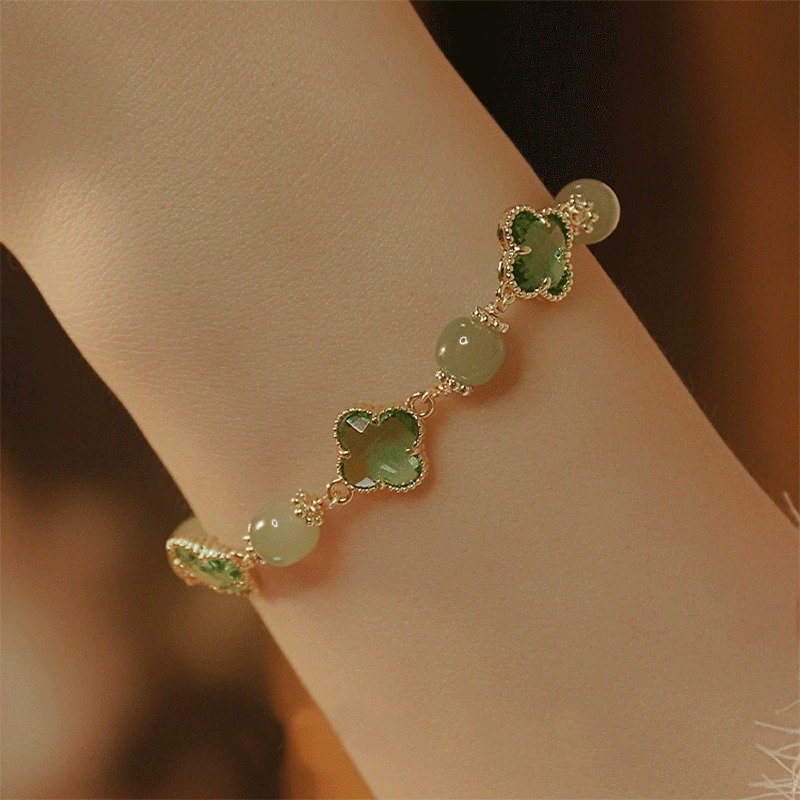
Four-leaf clover motifs are often presented in lucky jewelry as wishes for good fortune. Wearers may connect the design with opportunity, encouragement or a fresh start. Individual interpretations vary; a four-leaf shape does not guarantee an outcome or identify the material used to make it.
The Designer Clover Bracelet combines a green quartz design with a four-leaf motif. Its green appearance is a styling choice; it should not be described as jade simply because the color looks similar.
Three-leaf shamrock: count the leaves
A shamrock motif has three leaflets. It should not be silently renamed a four-leaf clover in a buying guide. If the number of leaves is part of your personal meaning, examine the photographs and written description before choosing.
The Lucky Clover Bracelet listing identifies a three-leaf shamrock design in 316L stainless steel with a platinum-silver tone. Its product name does not change the three-leaf form. Choose it for the shape and finish that are actually offered.
Pixiu: a Chinese mythical creature with historical context
Pixiu is a mythical creature in Chinese cultural history. The National Museum of Natural Science’s Pixiu collection note discusses a hybrid guardian figure in a historical funerary context. Modern jewelry adapts the motif for personal wishes, including prosperity; a historical object is not evidence that wearing a bracelet changes your finances.
The Feng Shui Bracelet uses a Pixiu-inspired motif and lists brass alloy. For a fuller explanation of the creature, read our Pixiu meaning and history guide.
Red cord: distinguish construction from color
A red cord is a material feature, while red enamel, a red stone or a red charm is a color detail. The meaning of a cord depends on the community, occasion and wearer; avoid presenting one practice as universal to all Chinese, Buddhist or feng shui traditions.
For example, the Lucky Red Bracelet shows repeating red clover charms on a gold-tone alloy chain. It is a red motif bracelet, not a red-string bracelet. That distinction matters if you specifically want a cord design.
Eye motifs and personal symbols
An eye motif may carry protective associations in a particular cultural setting, but its interpretation should be researched in that setting. It is not automatically a Chinese feng shui symbol. Our Lucky Eye meaning guide explores the subject separately.
Hearts, initials, flowers and other designs can also feel meaningful through a relationship or memory. You do not need to assign them a traditional meaning to enjoy them. If a listing does not name a motif clearly, describe its visible shape instead of inventing a religious or historical identity.
Use three questions to choose a motif
- What is actually shown? Count leaves, identify cord versus chain, and check whether the seller names the motif.
- What story is supported? Separate museum or cultural context from a retailer’s modern interpretation.
- What does it mean to you? Choose a personal wish or memory without treating the piece as a guarantee.
For the Chinese cultural background behind jade, Pixiu and red cord, continue to our Chinese bracelet symbolism guide. Braceletforluck brings several design inspirations together; each piece deserves its own accurate description.
Frequently asked questions
Are a shamrock and a four-leaf clover the same symbol?
No. A shamrock design has three leaflets, while a four-leaf clover motif has four. Check the actual design rather than assuming every product called clover shows four leaves.
Are all lucky bracelet symbols part of feng shui?
No. Clover, eye motifs, red cords and Pixiu come from different cultural contexts. A jewelry collection can include several inspirations without making them one tradition.
Can I give a symbolic bracelet to someone with different beliefs?
Yes, if the style and gesture suit the recipient. Explain why you chose the motif as a personal wish, and let them decide what meaning they want to give it.